
A full bathroom renovation in Melbourne commonly costs about $15,000 to $35,000, and standard projects cluster between $20,000 and $32,000 once demolition, plumbing, electrical work, waterproofing, tiling and fixtures are in the price. Treat that as a scope band, not a suburb average, because two bathrooms with the same tapware can sit thousands of dollars apart once you move a waste or open a floor.
National demand makes a single city figure even less useful. The Housing Industry Association estimated demand for approximately 244,000 bathroom renovations during 2024–2025, and a 2025 industry report citing that data put a small ensuite, including labour, trades and materials, at approximately $10,000–$25,000, with capital-city projects generally toward the higher end, according to news.com.au. In the September quarter of 2023, Australians spent more than $3 billion on alterations and additions, a 4.2% quarterly rise. More than 30% of respondents in that coverage allocated $5,000–$15,000 for renovations, and nearly one-quarter budgeted $15,000–$30,000. A bathroom that needs several licensed trades often clears the lower of those household bands.
Table of Contents
- What Bathroom Renovations Costs in Melbourne Today
- Itemised Breakdown of a Melbourne Bathroom Budget
- Price Drivers That Move a Quote Up or Down
- Waterproofing and Hidden Costs That Inflate a Budget
- Set Your Scope Then Compare Quotes
- Budgeting With a Contingency and Future-Ready Choices
What Bathroom Renovations Costs in Melbourne Today
Match the job to a tier before you compare builders. Bathroom renovations costs in Melbourne describe what the work includes, not which postcode you live in. A compact room is not automatically the cheap tier. Relocating plumbing, adding waterproofing, upgrading electrical work and meeting compliance can push a small ensuite into the same money as a standard full bathroom.
| Project tier | Indicative range (AUD) | What it usually covers |
|---|---|---|
| Small ensuite renovation | $10,000–$25,000 | Labour, trades and materials for a compact room, mostly on the existing footprint |
| Full bathroom, Victorian range | $15,000–$35,000 | Demolition through to fixtures, across all trades |
| Standard project, most common cluster | $20,000–$32,000 | Demolition, plumbing, electrical, waterproofing, tiling and fixtures |
| Premium project | $65,000–$120,000+ | Higher-end finishes, custom joinery and complex layout or structural changes |
Read the tier, not the suburb
The small-ensuite band covers a compact room that mostly stays on its footprint. Capital-city labour and access usually sit toward the top of that band, not the bottom. The Victorian full-bathroom range is wider because it runs from a straightforward strip-out to a job with several trades and new fittings. The cluster most homeowners land in is the standard band, where demolition, services, the wet area, tiling and fixtures are all genuine line items.
Premium work is a different project. Custom joinery, high-grade finishes and a layout or structural change are what push a bathroom into that top tier. Finish grade alone rarely does it.
Practical rule: Pick the tier that matches the scope you intend to build, then ask builders to price that scope. A city-wide average hides the difference between a same-footprint refit and a room that is being replumbed.
If your brief is "new tiles, same shower position, same toilet", you are not shopping the premium tier. If the brief includes a new wet area, a moved stack, or joinery built to a drawing, you are not shopping the bottom of the ensuite band either.
Itemised Breakdown of a Melbourne Bathroom Budget
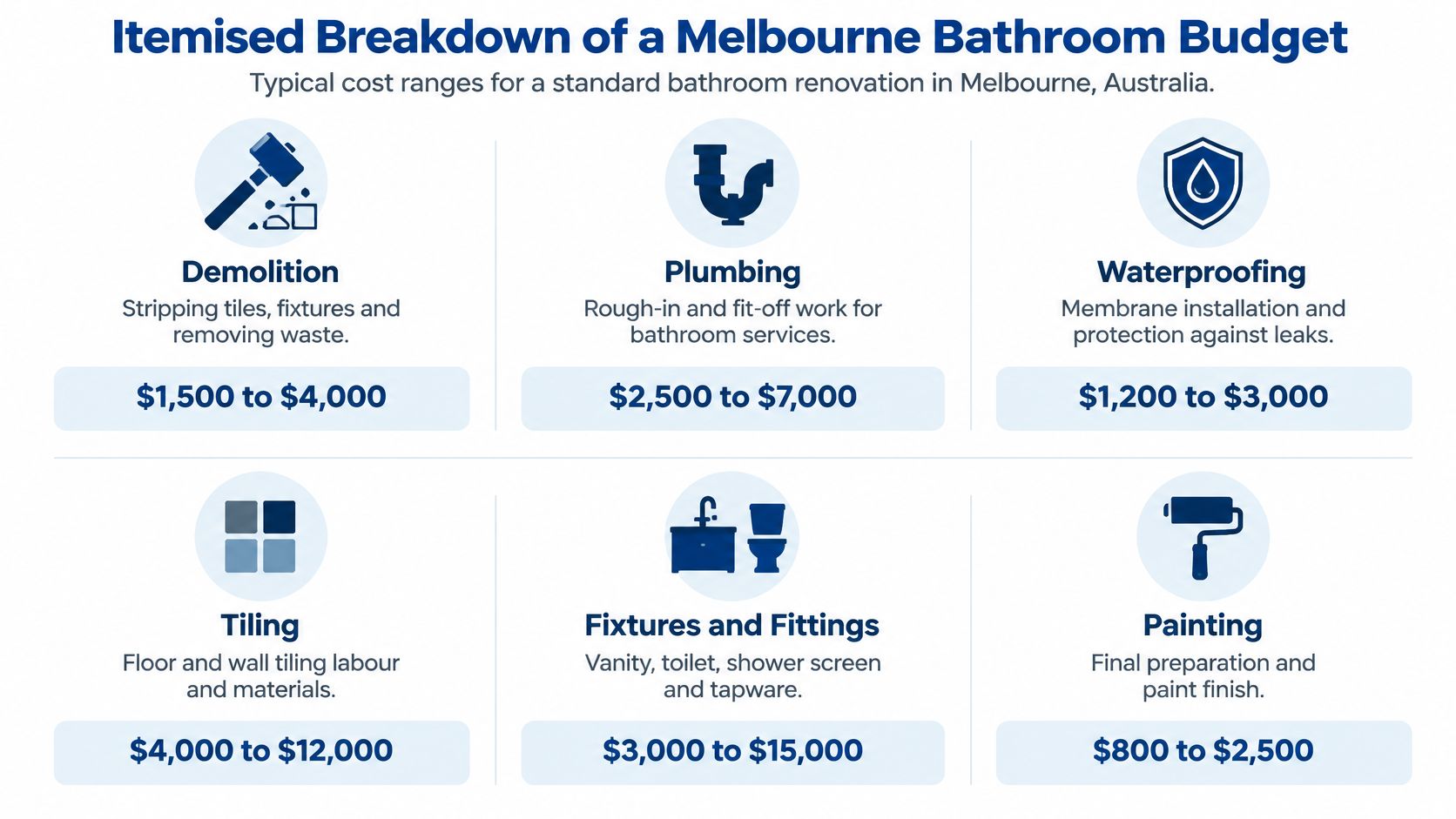
Price the trades before the finishes. The Quote Yard sets out indicative trade allocations for Melbourne and broader Victoria, from demolition through to fixtures, but published bands stop short of every line a real budget carries. The rows below cover what a standard-scope job has to pay for, including the two allowances those bands leave blank.
| Trade or cost item | Indicative cost (AUD) | What it covers |
|---|---|---|
| Demolition | 1,500–4,000 | Stripping tiles, fixtures and waste removal |
| Plumbing rough-in and fit-off | 3,000–6,500 | Supply, waste and drainage by a licensed plumber |
| Electrical work | 800–2,500 | Lighting, exhaust fan and power points |
| Waterproofing | 700–2,200 | Membrane, floor-to-wall junctions and wastes, excluding substrate repair |
| Tiling | 2,000–6,000 | Labour and setting materials for floor and wall tiles |
| Fixtures and fittings | 2,000–8,000 | Toilet, basin, shower, taps and mirror |
| Cabinetry | 1,000–4,000 | Vanity and storage, a typical allowance outside the published trade bands |
| Ventilation and permits | 300–1,000 | Exhaust system and any approvals, a typical allowance outside the published trade bands |
Add the eight priced lines
Run the column down. The low ends total $11,300 and the high ends total $34,200, a span that brackets where full projects bill. That is the whole point of an itemised budget: a standard-scope quote should land inside the column because every line has been paid for. A quote well under the low sum has dropped a trade, thinned the membrane, or parked the vanity in a prime-cost footnote.
Test a $21,000 quote against it. If demolition, plumbing, electrical, waterproofing, tiling and fixtures already consume the figure, cabinetry and the exhaust upgrade were left out, not saved.
Plumbing position is the swing factor. Keeping the toilet, shower and basin where they are holds rough-in labour short. Move any of them and the labour climbs, and altered services bring compliance work with them.
In Victoria, regulated plumbing work belongs to a licensed plumber, and larger projects attract certificate and domestic building insurance requirements. Confirm who lodges each certificate before you sign, not after demolition starts.
Tiling labour and setting materials deserve their own comparison, so read how tiling works in a Melbourne bathroom renovation before you accept a single lump sum. The tap and the mirror are the visible spend. The pipework and the wet area behind them are usually the larger one.
Read the exclusions as carefully as the totals. The waterproofing line stops at substrate repair, and in older heritage-overlay housing that repair is where a cheap quote grows teeth.
Price Drivers That Move a Quote Up or Down
The same shower screen can sit on a cheap job or an expensive one. What changes the quote is the work behind the finish, not the photo on the mood board.
Keeping the stack is the cheapest layout. Rough-in stays short, and you avoid opening a slab or a wall just to reach a waste. Move the toilet 600 mm toward the window in a 1970s brick veneer and the plumber is chasing drainage, not swapping a pan. That labour, plus the compliance that comes with altered services, is the price of the "small" layout change.
Floors fail. Poor falls to the waste, a cracked screed, or a soft subfloor mean remedial carpentry and a new bed before a single tile is set. In an older Californian bungalow, that discovery often waits until the first day of demolition.
Heritage-overlay streets add process, not just taste. Sub-floor waterproofing is harder, and older linings can force asbestos disposal. Budget for investigation, not for a like-for-like tile price copied from a newer suburb.
Geometry costs detailing time. A square shower with one waste is straightforward. Add a niche, a second waste, a hob and three pipe penetrations, and membrane and tiling time both rise. Large-format tiles and patterned layouts do the same through cuts, not through the tile's shelf price.
Access and waste are labour. A first-floor bathroom with a tight stair, no place for a skip, and a laneway collection point burns hours that a ground-floor job never sees. Straight fixture replacement may not need a building permit. Removing a wall, resizing the room, or creating a new wet area can. Fixture grade still matters, but the gap between a standard mixer and a premium one is obvious on the invoice. The gap created by moving services is easier to miss until the quote arrives.
A like-for-like swap is the cheapest route. The moment the drawing moves a fixture, you are buying labour and compliance, not a better-looking room.
Waterproofing and Hidden Costs That Inflate a Budget
A lower waterproofing price usually means a shorter scope, and the gap only shows when something fails.
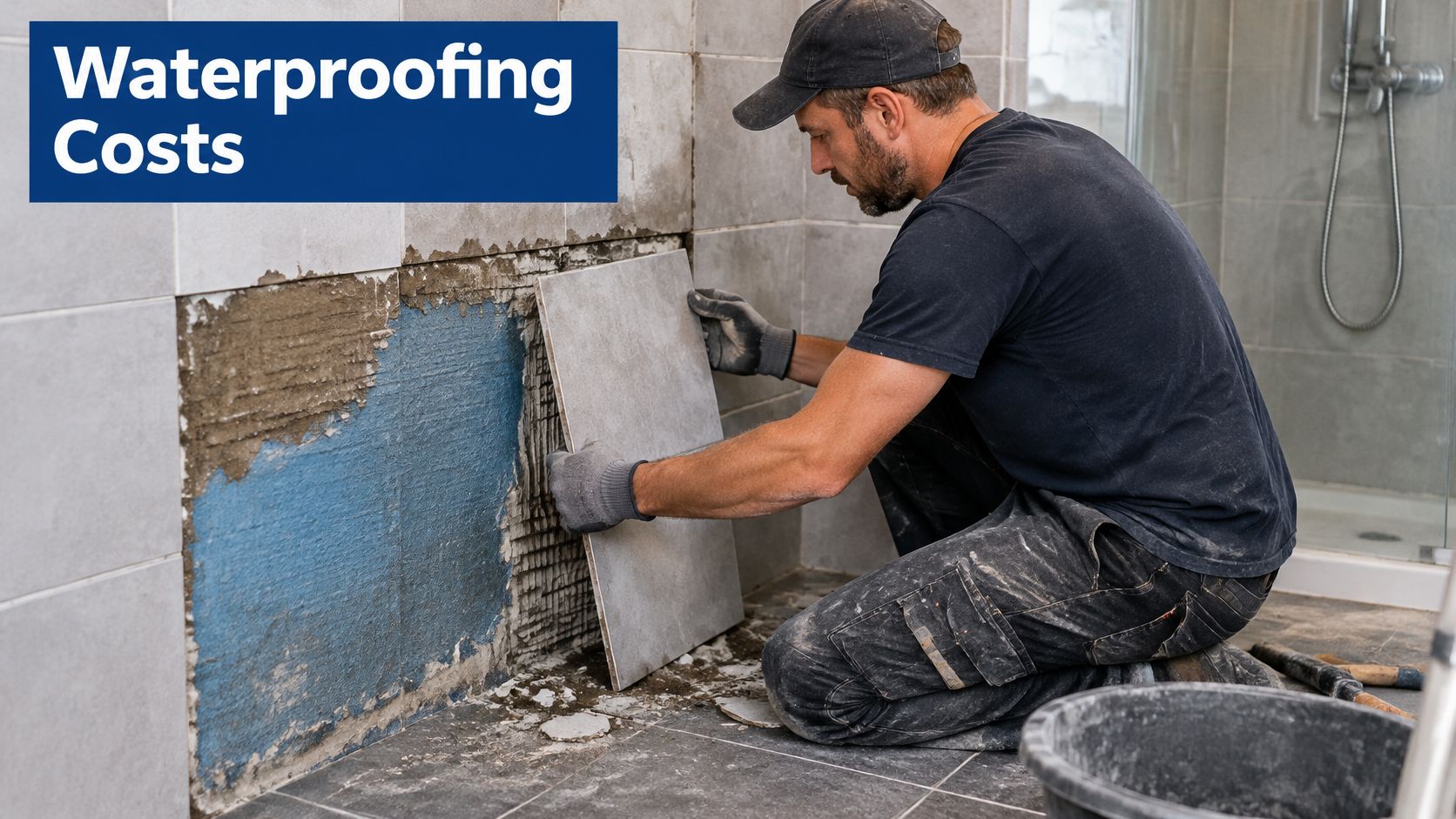
Failure means the finished tiles, the screed and the membrane all come out before anyone can reinstate the room. An indicative Victorian rectification cost is approximately $6,000–$14,000, which is why The Quote Yard's Melbourne renovator guidance treats the wet area as a high-consequence line item. Wet-area work has to satisfy AS 3740:2021 and the relevant National Construction Code provisions: membrane continuity at floor-wall junctions, wastes, penetrations and shower areas.
What the membrane price leaves out
A typical Melbourne waterproofing line runs roughly $700–$2,200, and the spread inside that range comes down to substrate condition, floor construction, shower geometry and how many penetrations the membrane has to dress. Under AS 3740:2021, shower walls are commonly waterproofed to at least 1,800 mm above the floor substrate, and the shower floor needs continuous membrane with positive falls to the waste.
Two quotes can carry the same waterproofing label and cover very different work. Split the allowance into separate lines before you compare them:
- Membrane installation: the coating or sheet itself, dressed at every junction and penetration.
- Substrate preparation: repairs, sheet replacement and a surface the system can bond to.
- Falls and screed: the bed that sends water to the waste, priced on its own.
- Remedial carpentry: rotten framing or a soft floor that only shows once the tiles come off, and the older the house, the more likely that find.
A cheap membrane line that leaves preparation out is the part of the system most likely to fail. Before you accept a number, ask whether the substrate is assessed before the price is locked, whether falls and waste positions are itemised, whether the products form one compatible system, and whether you get inspection evidence before tiling starts.
Paying for documented preparation costs more this month and less over the life of the room. Hidden moisture is the expensive version of a bargain wet area.
The same discipline sits behind the mistakes worth avoiding in a bathroom renovation. Vague answers to those four questions mean the lower quote is lower because work is missing, and the missing work is where the budget blows out.
Set Your Scope Then Compare Quotes
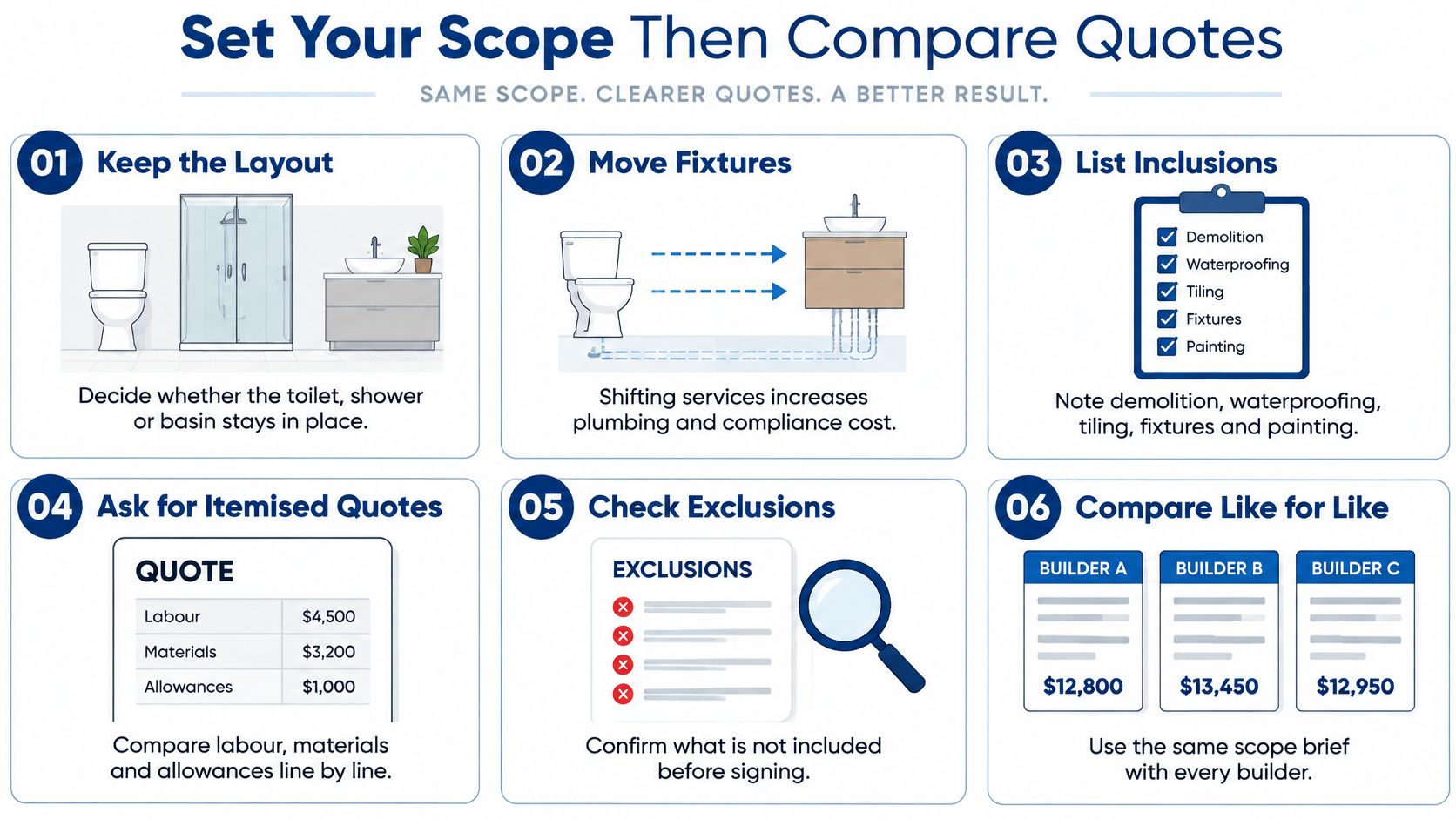
Write the scope before you call anyone. Otherwise you will compare three different bathrooms that happen to share a room size.
- Decide if the layout stays. If the toilet, shower or basin moves, expect higher plumbing and compliance cost. Say so clearly.
- Check the overlay. A heritage listing changes sub-floor work and can bring asbestos disposal into the job. Name the suburb and the overlay on the first page.
- List the trades. Demolition, plumbing, electrical, waterproofing, tiling, fixtures and cabinetry. If a trade is missing from your list, it will go missing from someone's quote.
- Flag permit triggers. Wall removal, a resized room, or a new wet area can need a building permit. A straight swap of fixtures and finishes often does not.
- Send one pack. Same drawings, same specification, same fixture list, to every builder.
Why the average misleads
Available Melbourne estimates range from about $14,000–$42,000, with a mid-range project near $23,000, and the spread is scope, not a mysterious builder markup, as the What's the Damage renovation market report frames it. Waterproofing extent, a moved stack, tile complexity, access, waste, heritage constraints and permits all change the job inside that band. Price transparency beats another city-wide average.
Every quote should itemise demolition and waste, plumbing, electrical, waterproofing, substrate preparation, tiling labour and materials, fixtures, cabinetry, ventilation, permits and a contingency. Use the same checklist on each PDF.
| Scope item | What a complete quote shows | Red flag when missing |
|---|---|---|
| Demolition and waste | Removal and disposal priced separately | No waste removal line |
| Plumbing | Whether the layout is retained or moved, with rough-in and fit-off priced | Relocation shown on drawings but not priced |
| Waterproofing | Membrane, substrate preparation, falls to waste and inspection evidence | Membrane price only |
| Electrical | Lighting, exhaust fan and power points listed separately | Electrical lumped into one sum |
| Tiling | Labour and materials shown separately, with tile supply stated | Single lump sum for tiling |
| Permits and compliance | Plumbing compliance certificate, and any building permit if walls change | Silent on compliance |
| Insurance | Domestic building insurance noted when the contract value triggers it | No mention of insurance |
| Contingency | Stated contingency amount or method | No contingency line |
A low quote is efficient only when the inclusions match the brief. If the cheap one is silent on substrate preparation, waste disposal, or insurance, you are looking at excluded work. Ask for written inclusions and exclusions before you treat the gap as a bargain.
Budgeting With a Contingency and Future-Ready Choices
Renovation cost is the invoice. Lifecycle cost is the invoice plus the repair you pay when the cheap choice fails behind the tiles. A cheaper bathroom can create later expense through mould, a failed membrane, a repair you cannot reach, or fittings you replace early.
The largest financial risk is what you find after demolition, especially in older wet areas. Current Melbourne estimates note that heritage-overlay suburbs may incur an additional 10–25% because sub-floor waterproofing is more complex and asbestos disposal may be required, as summarised by BuildPilot. Separate guidance on that page lists waterproofing at roughly $800–$2,000 and wet-area wall sheeting around $900–$2,000, rather than assuming either sits inside the tiling price. Size the contingency to that discovery risk. Older wet areas and overlay homes need the larger allowance. A newer house with a sound floor needs less.
Three scopes you can actually choose
Minimum compliance keeps the existing layout, specifies waterproofing with substrate preparation, and includes the electrical and plumbing certification the work requires. This is the right spend when the bones are sound and you need a legal, dry room.
Practical durability adds the items that fail in daily use. Better ventilation, slip-resistant flooring, fittings that survive hard water, and an access point so a future leak can be found without smashing the wall. These are modest lines. They are not a luxury specification.
Future-ready design reinforces walls for grab rails, improves drainage and storage, and builds in access while the room is open. Retrofitting any of that means demolition again. Doing it now is a framing and membrane decision, not a second renovation.
Keeping the existing layout is not always the cheapest choice over ten years. A modest redesign that fixes a flat floor, a dead corner with no exhaust, or storage you cannot reach can cost less than living with the next strip-out. Spend first on what fails expensively and sits behind walls. Treat tiles, tapware and the mirror as the flexible part of the budget. For a planning sequence that survives the first year of use, start with practical steps for planning and maintaining the bathroom.
Elite Bathroom Renovations Melbourne scopes Melbourne bathrooms by layout, wet-area preparation and the trades on the quote, so you can compare a real brief instead of a city average. The team includes plumbers, electricians, tilers and cabinetmakers, and the work is backed by waterproofing, structural and minor-defect cover. Book a scope conversation at Elite Bathroom Renovations Melbourne.
